Outside Broadcast

The right facility for your show, not the one we happen to own

Outside broadcast production and engineering across Europe. We manage OB productions end to end, sit in the chair on someone else's truck, or build a flypack when a vehicle is the wrong answer.

What outside broadcast means here

Outside broadcast is the business of taking a proper multi-camera production out of a studio and putting it somewhere difficult: a show floor, a stadium, a concert hall, a castle courtyard. The cameras, the vision mixing, the audio, the comms, the recording and the path back out to an audience all have to arrive on a truck or in flightcases, work first time, and come down again afterwards.

It is the least forgiving part of this industry. There is no second take, the venue is rarely designed for you, and something always differs from the plan. Twenty years of doing it is the main thing we bring.

We don't own trucks, and that's deliberate

Most OB companies put a photograph of their vehicle at the top of this page. We can't, because we don't operate a fleet, and we'd rather explain why than pretend otherwise.

A company that owns a truck has to keep that truck busy. Every job gets quoted around the vehicle sitting in the yard, whether or not it's the right size, the right spec, or the right cost for your show. We're not carrying that. We source the facility for each production from a network of partners we've worked with for years, which means a small four-camera job doesn't get sold a twelve-camera truck, and a genuinely big show doesn't get squeezed into something that can't hold it.

You get the facility your production actually needs, and advice about it that has nothing riding on the answer.
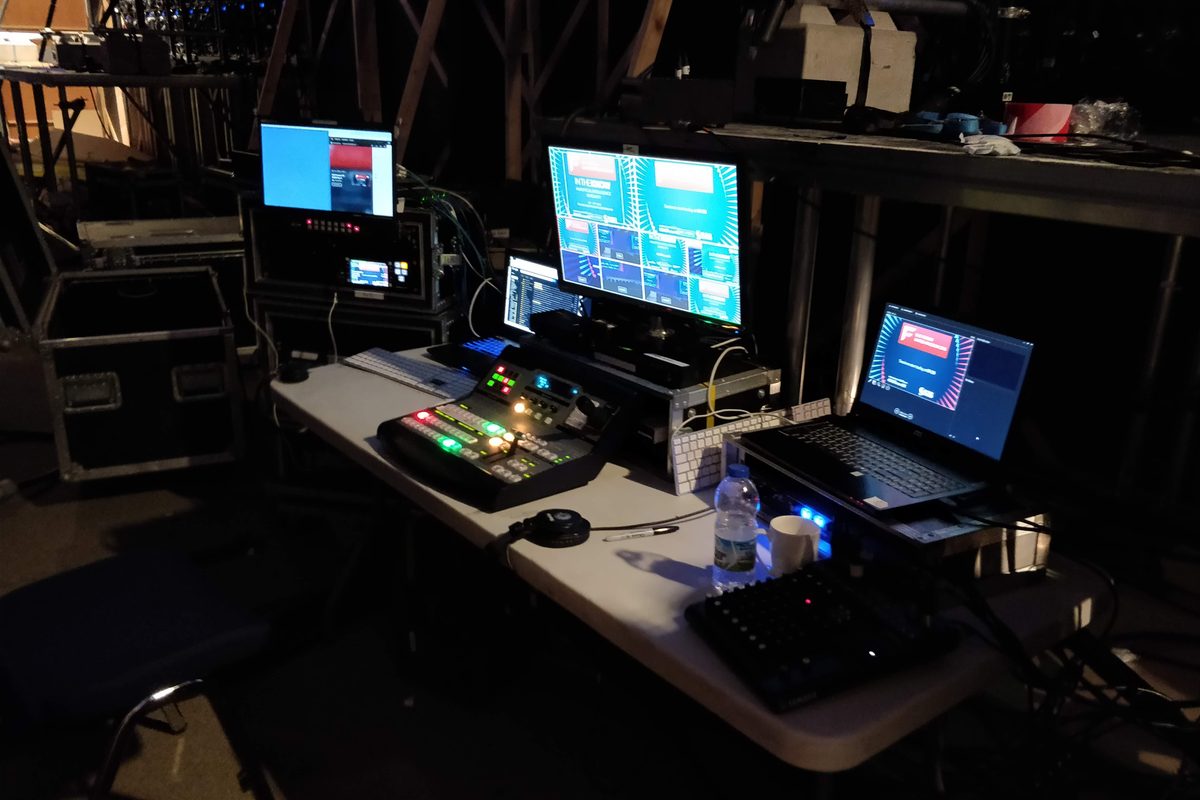
When a truck is not the right answer, the gallery gets built into the venue instead.

Four ways we work on OB

We run the whole production. You bring the event, we bring everything else: the facility, the crew, the workflow, the schedule and the person responsible when it all has to work. One contact, one line of accountability.

We come to your truck. Plenty of our work is being the director, vision mixer or engineer on a facility somebody else owns and operates. If you have the vehicle and need the head that goes with it, that's a straightforward booking.

We act as guarantee engineer. More on this below, because it deserves its own explanation.

We help you design OB capability. If you're specifying a facility, refitting one, or working out what your organisation actually needs before spending money on it, that's consultancy rather than production, and it's covered properly on our Broadcast Consultancy page.

Guarantee engineer

If you're not from this industry, this is the job of being the engineer a facilities company puts on their truck to guarantee it performs. You are responsible for the technical integrity of the vehicle and everything in it: that the signal paths are right, that the kit is configured for the show in front of it, that faults get found before they become failures, and that the production crew get what they were promised.

It is a role built entirely on trust. A facilities company hands over a vehicle worth more than a house to someone they believe will look after it and represent them properly on site.

We do this work for other companies. One example: guarantee engineer on the truck for High Viz Media Group at Printworks in London, covering a major electronic act's show. Thirteen cameras, EVS replay servers tied into the live broadcast, and camera feeds running out to the venue's VJ so the visuals the audience saw in the room were being cut from the same production. Two jobs at once, in other words, and both of them live.

We mention this because of what it says rather than what it earns. Other broadcast engineers understand exactly what it means that we get asked.

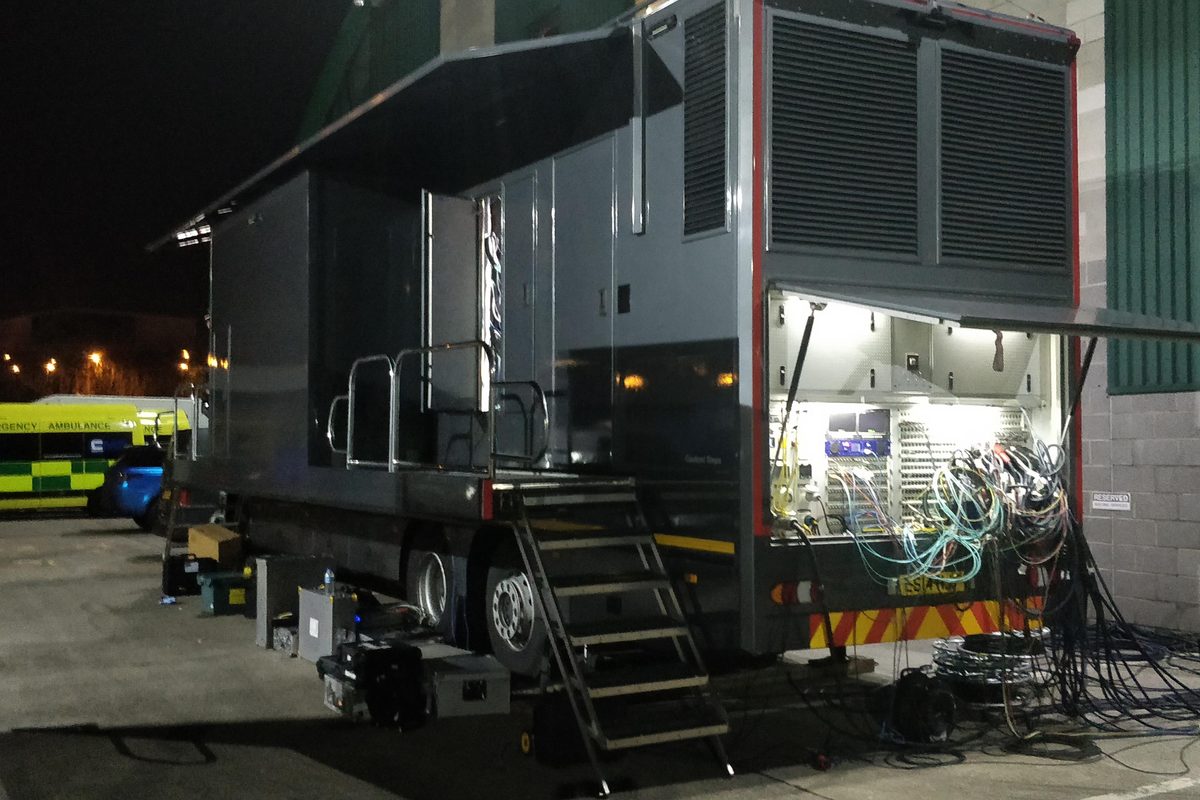
The truck we guaranteed. Somebody else owns it, we took responsibility for it going on air.

Truck or flypack

This is one of the first questions worth answering on any OB job, and the honest answer is that a flypack is usually the better option. It travels in cases, it goes where a vehicle can't, and it doesn't come with a vehicle's cost attached. We've used flypacks to cover shows across Europe and as far as India for exactly that reason.

Two things push the decision back towards a truck. The first is turnaround. A truck arrives pre-rigged and largely tested, so when you have very little time on site, it buys you hours that a flypack build simply cannot. The second is space inside the venue. A truck sits outside and takes its footprint with it, whereas a flypack has to live somewhere in the building, and in a venue where floor space is scarce or expensive, that room may not exist.

So it comes down to time and space more than anything else. Tell us the get-in schedule and what the venue can actually give you, and we'll tell you which one your show wants. Sometimes the answer is the truck, and we'll say so even though the flypack is the easier sell.

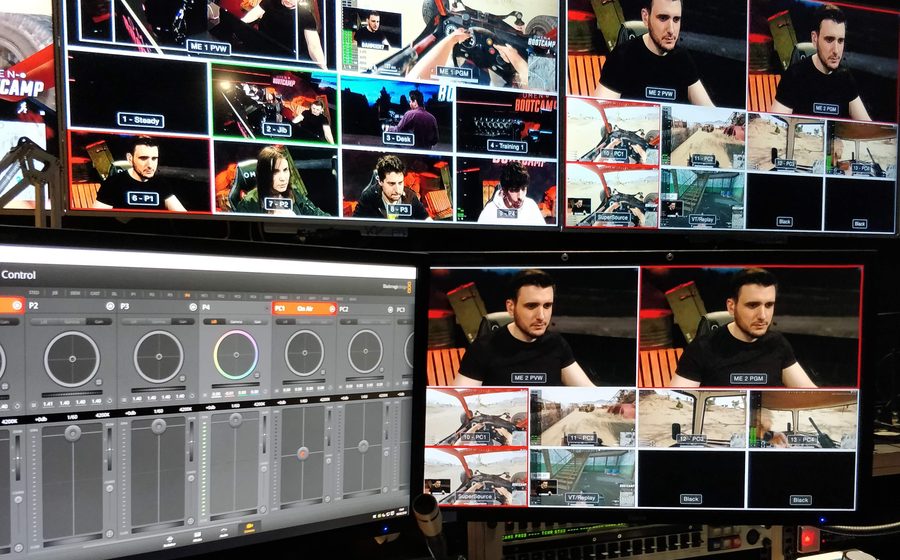
The multiviewer and the camera shading position, side by side.
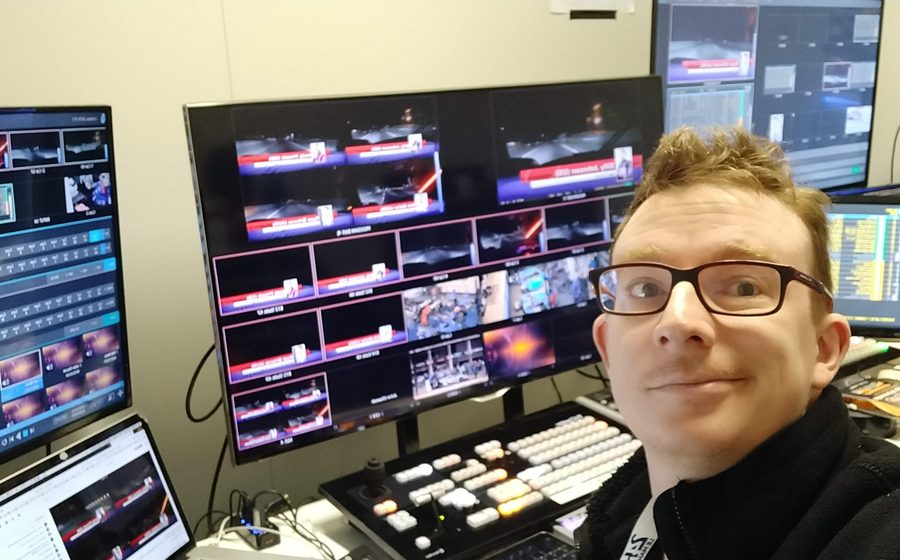
At the vision mixer during rehearsals, in somebody else's facility.

Some of the productions we've worked on

Larian Studios, with Dreamtek. The Panel From Hell series, produced across locations that ranged from converted offices to a mediaeval castle and a thousand-year-old abbey. Eight shows over two years, each with its own specification and its own set of problems to solve on site.

Zeekr 7GT launch, Brussels Motor Show 2026, with Sassy+. Multi-camera coverage of a European product launch on a live show floor, working alongside the client's own presentation team, providing the encoding on the ground and interfacing with the satellite truck that handled press distribution afterwards.

High Viz Media Group, Printworks London. Guarantee engineer on the truck for a major electronic act's show. A thirteen camera production with EVS replay tied into the live broadcast, simultaneously feeding cameras to the venue's VJ for the in-room visuals.

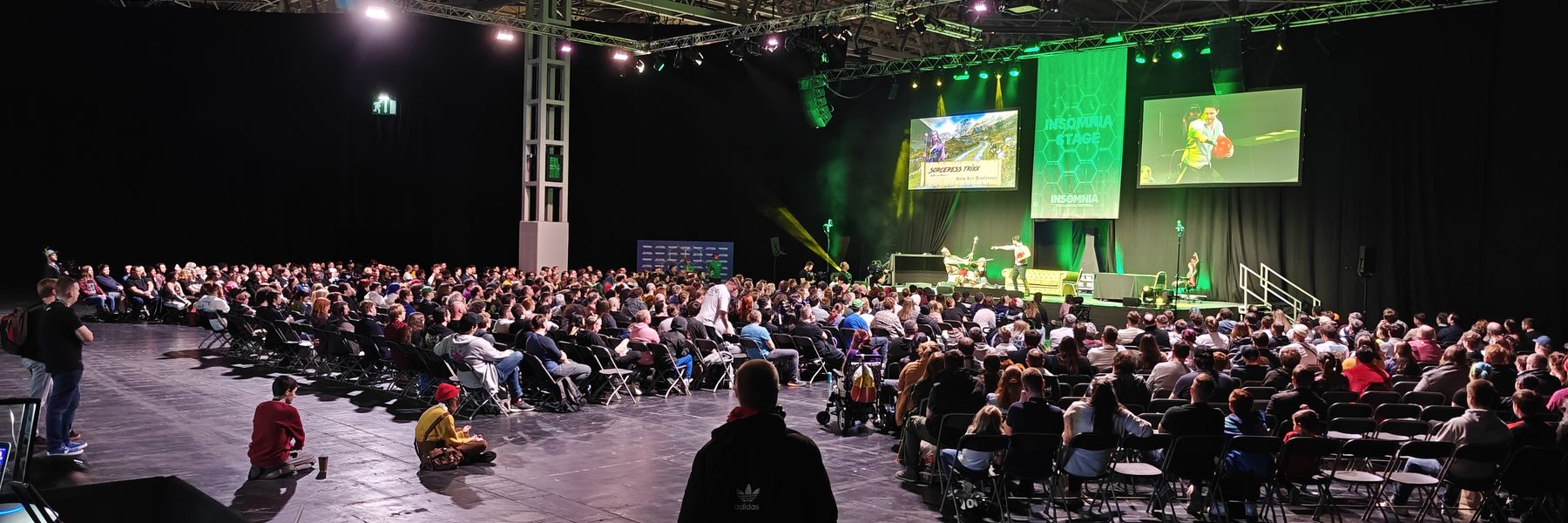
A hall this size needs cameras in four places at once, and everyone hearing the same director.

How we like to work

Redundancy is a dial, not a switch, and every notch costs money. Our job in pre-production is to show you where the single points of failure are, what each one would cost to remove, and what we'd do if it failed anyway. Then you decide with your eyes open. We would much rather have an uncomfortable conversation weeks out than a comfortable silence followed by a surprise on site.

The same honesty applies to the work itself. If your budget doesn't fit your ambition, we'll say so and tell you what it does buy. If another company is a better fit for what you need, we'll point you at them. We want to work with you rather than simply for you, which over twenty years has turned out to be both the more decent way to operate and the better business.

Questions

Frequently asked

Do you own your own OB trucks?

No, deliberately. We source the right facility for each production through partners we've worked with for years, which means our advice about what your show needs isn't shaped by what's sitting in our yard.

Can you work with our existing facility supplier?

Yes, and we often do. If you already have a truck and a relationship with the company that runs it, we'll slot in around that.

Do you travel?

We're based in Brussels and work across Europe and internationally.

Can you supply just an engineer or a director?

Yes. Booking one experienced person into an existing production is normal work for us, whether that's directing, vision mixing, or acting as guarantee engineer on a facility.

What's the smallest job you'd take?

There isn't really a floor, but there is a point below which an OB approach stops making sense and a flypack or a straightforward streaming setup does the job better and cheaper. We'll tell you which one you're looking at.

How far in advance should we book?

We take last-minute work and we're good at it, but the earlier we're involved the better the result. Early means we can shape the production around what you're trying to achieve rather than working around decisions already made.

Tell us what you're trying to put on air

Bring us the event, the venue and roughly what you have to spend. We'll tell you what facility it actually needs, and be straight with you if that turns out to be less than you expected.

Start a conversation
Tell us about your event