Remote Event Production
Remote and hybrid event production from Brussels. We bring contributors into your event from wherever they are, and we can run the production itself from anywhere as well.
Most productions put the gallery next to the stage. This one does not.
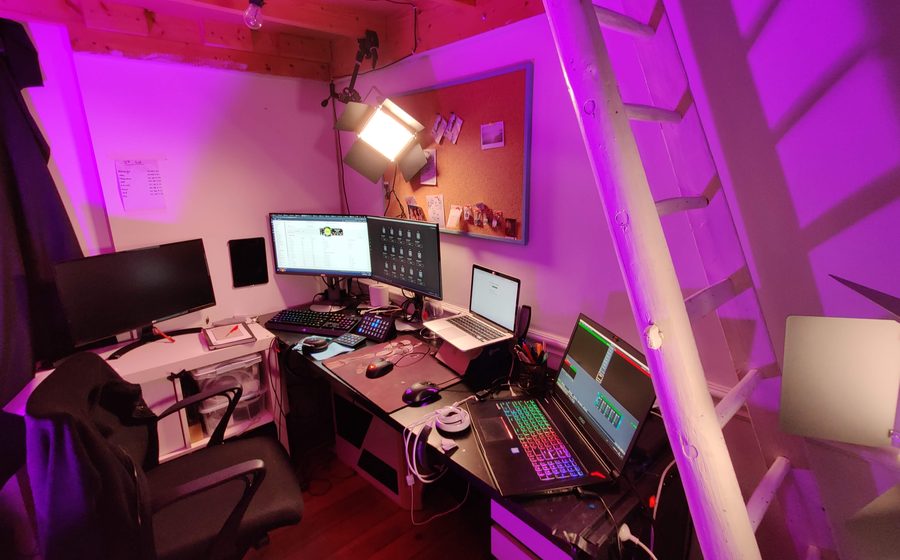
Remote event production means the production itself happens largely in the cloud. There may still be cameras and people at a venue, or there may be no venue at all, and the operators cutting the show can be sitting wherever they happen to live, provided the connection at their end is up to it. It is the same broadcast discipline, distributed.
If your question is about how the show reaches its audience, that is our live streaming and webcast work. This page is about where the people making it are.
During COVID this stopped being an interesting idea and became the only way anything happened. A company called Production Solutions was never going to sit that one out, so we built the capability properly and ran it for several clients, at every size from one person in a spare room to productions with dozens of moving parts.
What came out of it was not a stopgap. It was a set of ways of working that we still use, because the problems it solves did not disappear when travel came back. The senior speaker whose schedule will not survive two days away. The panellist in another timezone. The delegate whose travel plans fall through the week of the event. All of that used to mean an empty chair. It does not have to now.

This is the part clients ask for most, and the part most suppliers do badly.
On a large international conference we look after the on-site production, getting content onto the screen in the room, and we also handle the contributors who cannot be there in person. They dial in, and we bring them into the production itself, cut into the show and carried properly into the room's audio, so taking part is straightforward both for them and for whoever is chairing.
The difference is almost entirely in the preparation. Before the event, we get on a call with remote contributors and sort out the things that quietly ruin a remote appearance: camera height and framing, a background that is not distracting, lighting that is not coming from behind them, and a connection that will hold up. Where it is worth doing, we will specify or supply better kit for them to use at home rather than hoping the laptop webcam is good enough.
How much of that we can do comes down to how early we reach them. A call a few weeks out leaves time to move a desk, add a light, or get a decent microphone delivered to someone's house. A call the day before the event leaves time for advice and little else. So the sooner we can get to your contributors, the more we can do for them.
On the day, someone is watching each contributor before they go live. Sitting against a bright window, a room that has got darker since the rehearsal, audio that has picked up a hum, a background that has acquired a pile of washing. Small things, all of them easy to put right while someone is paying attention, and all of them very visible when nobody is.
We also make sure contributors understand how and when they will be seen, which sounds obvious and is the single most common thing nobody tells them.
The other half is what they hear. A remote panellist needs a clean feed of the room without hearing themselves come back, and the small delay between the room and their screen has to be handled rather than ignored, or a simple question and answer turns into two people talking over each other. Getting that right is the difference between a remote contributor who takes part in the conversation and one who is clearly watching it happen.
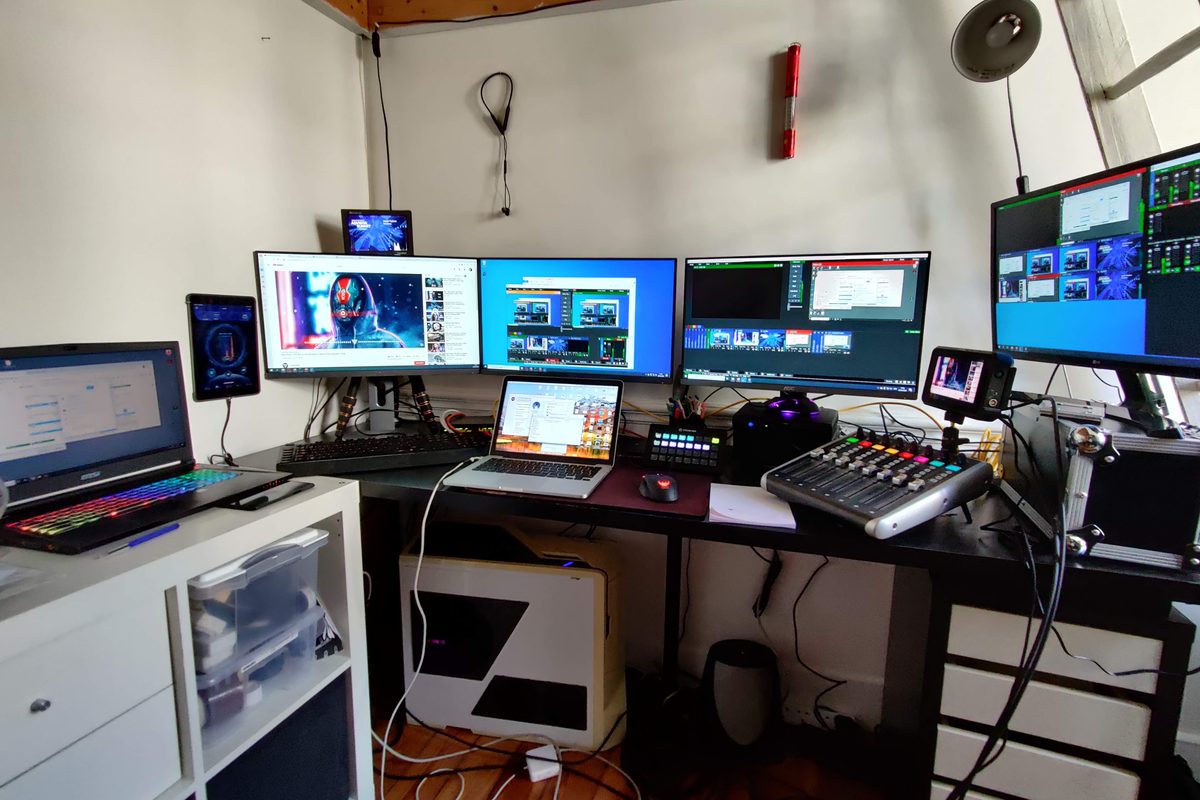
At the small end, a single camera and a handful of virtual production instances is enough. That covers a chief executive delivering an internal briefing, where the work is cutting their slides properly, keeping their notes in front of them, and making sure they look and sound like someone worth listening to.
At the other end, we have run productions with a live audience and multiple contributors carried on between thirty and seventy remote instances, each handling a different part of the job and working together as one production, operated by engineers spread across Europe and the UK.
Much of the underlying capability was developed with Streamwise during the COVID period, where we built cloud based gallery infrastructure alongside their own development team. That story sits on our broadcast consultancy page.


Let us be straight about this first. The best version of any event is everyone in the same room, and where that is achievable it is what we will tell you to do. Remote production is not a better idea than being there. It is what keeps the event whole when being there is not on the table.
Your contributors are remote anyway. If the people in the show are not going to be in one room, designing the production around that from the start works far better than bolting it on at the end.
Travel is difficult. Cost, schedules, logistics or wider circumstances. A senior speaker who cannot give up two days can still give you twenty minutes.
You want the same crew every time. The one people miss. Ideally your crew travel with the show, and a recurring event gains enormously from that continuity. When they cannot travel, a remote gallery keeps those same people in play, so the edition in another country is run by the team who already know how your show works.
We want to work with you, not simply for you. On remote productions that matters early, because most of the quality is decided before the day: who is dialling in, from where, on what, and what they need from us to look their best.
Tell us who cannot be in the room and we will work backwards from there.
Questions
Not necessarily. We have run productions with nobody on site at all. Where there is a venue and a live audience, we usually will be there, and the two approaches combine perfectly happily.
Yes, and doing it well is most of what this service is. They are brought into the production properly so the room sees a participant, not a video call.
Less than people expect, and we will tell them exactly what. Where the appearance matters enough to justify it, we can specify or supply better cameras and microphones for them to use at home.
Usually one short call each, well before the event. That call is where most of the difference is made.
Yes. We have run single productions with operators spread across Europe and the UK, and contributors in different countries are routine. The planning that makes it work is mostly about each person's connection, which is why we check them individually beforehand.
No. Internal communications, briefings, panel shows, product launches, and esports events, which we have run remotely as well. Anything where the people who matter are not all in the same place.
Whether it is one speaker dialling into a conference or an entire production running from six different countries, tell us what the event needs to look like and we will tell you how we would build it.
Start a conversation